
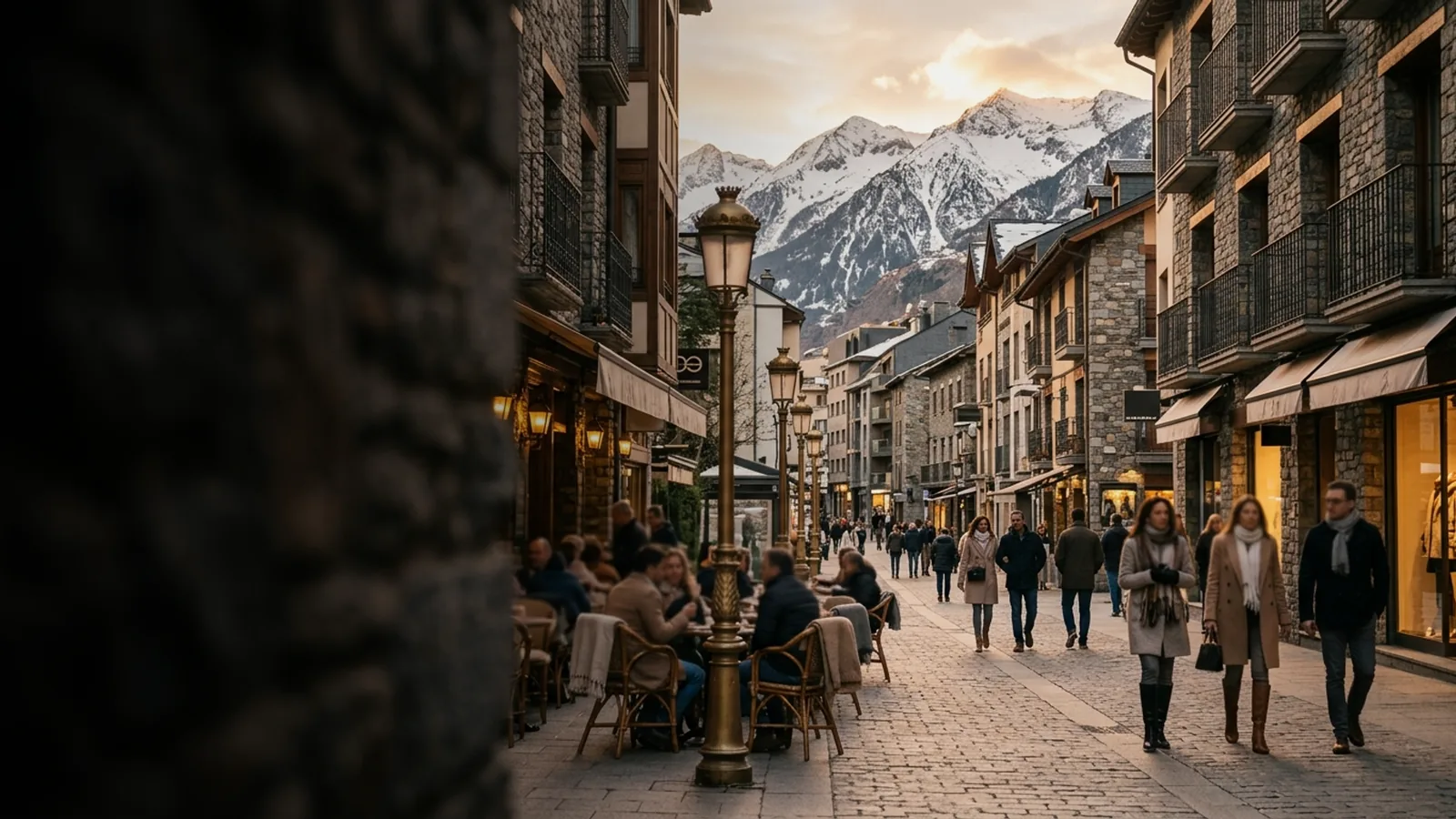
In brief : Cost of living in Andorra : what budget in 2026 ?
- Is life cheaper in Andorra than in France? Generally yes, by around 19% according to international indices, except for housing which has become more expensive due to a tight market.
- What monthly budget is needed to live in Andorra? As an indication: €1,500 to €2,400 for a single person, €2,500 to €4,500 for a family using state schools, and more with an international school.
- Are schools free in Andorra? Yes. The three public systems (Andorran, French and Spanish) are free for residents.
Short answers by Andorre Gestoria, a French-speaking tax and wealth advisory firm in Canillo (RLG CAPITAL, SLU). Details, figures and sources in the article — updated 3 September 2026.
Andorra is broadly cheaper than France across most categories (around –19 % according to international indices), with one notable exception : housing, which has become a tight market. Here is the detail, updated for 2026.
Housing : the biggest expense
This is the only category that is more expensive than in France. Demand exceeds supply and rents have risen sharply in recent years. Indicative rental ranges (Andorra la Vella / Escaldes) :
- Studio / one-bedroom : €750 – €1,200/month
- Two-bedroom : €1,200 – €1,800/month
- Three-bedroom : €1,800 – €2,600/month
For purchases, the national average price is around €4,300 – €4,500/m² on official transactions, and higher in central Andorra la Vella or for new-build premium properties (€5,000 – €7,000/m²). Full details in our guide on buying property in Andorra.
Groceries, fuel and everyday expenses
Food is on average cheaper than in France (around –30 % on groceries according to indices), although some products are comparable. Fuel is significantly cheaper : around €1.55/L (unleaded) in 2026, roughly –20 % compared with France. At a restaurant, expect €15 – €20 for a set menu and €1.70 – €2 for a coffee. Worth knowing : buses are free for residents.
Salaries and standard of living
Since 1 July 2026, the minimum wage has been €1,568.67/month gross (€9.05 per hour). The average salary reached €2,760 gross in May 2026 and the median salary €2,236 (Departament d’Estadística). Combined with low taxation (IRPF from 0 to 10 %), these levels provide a high net purchasing power.
Healthcare : the CASS
Andorra's social security system (CASS) is funded by contributions of 6.5 % (employee) and 15.5 % (employer). Through the co-ordinated care pathway, it reimburses approximately 75 % of routine care, 90 % of hospital stays and 100 % of maternity. A private top-up policy (€30 – €110/month depending on profile) covers the remainder.
Schools : free for residents
Andorra offers three free public systems : the Andorran school (in Catalan), the French school and the Spanish school. For private international education, budget around €6,000 to €13,000/year (e.g. Agora International School). Ideal for French-speaking families : French-medium schooling, free of charge.
What budget should you plan for ?
| Profile | Indicative monthly budget |
|---|---|
| Single person (comfortable) | €1,500 – €2,400 |
| Family (state school) | €2,500 – €4,500 |
| Family (international school) | €4,200 – €6,700 |
| Indicative ranges for 2026 (housing, food, healthcare, leisure). Varies depending on lifestyle. | |
Key takeaways
- Cost of living ≈ –19 % vs France… except housing (a tight market)
- Rent : studio €750 – €1,200, three-bedroom €1,800 – €2,600
- Fuel –20 %, cheaper groceries, free buses
- Minimum wage €1,568.67, average salary ≈ €2,760 (2026)
- State schools (including French) free ; CASS reimburses 75 – 100 %
Before moving, secure your residency and tax position. Also discover living in Andorra day to day.