


In brief : Living in Andorra: the downsides, unfiltered.
- What are the main downsides of living in Andorra? A scarce and expensive housing market, geographic isolation (no international airport or train, Barcelona and Toulouse around three hours away), a narrow job market for the accompanying partner, a Catalan requirement at permit renewal since April 2026, a status outside the European Union and Schengen, demanding banks, and a h…
- From what income level does Andorra really become worthwhile? In our experience, below around €120,000 in annual income, the tax saving takes several years to absorb the full cost of relocating: company formation, professional fees, the AFA payment, the move, deposit and first month's rent, possibly the exit tax.
- Do you need to speak Catalan to live in Andorra? Day to day, French and Spanish are more than enough. But since April 2026, renewing residence and work permits requires level A1 Catalan at the first renewal, then A2 at the second — failing certification, at least 30 hours of training is required instead.
Short answers by Andorre Gestoria, a French-speaking tax and wealth advisory firm in Canillo (RLG CAPITAL, SLU). Details, figures and sources in the article — updated 3 September 2026.
A failed relocation is expensive: setup fees, the move, the deposit, sometimes the exit tax — and, above all, two years of your life spent trying to make a poorly calibrated plan work. We regularly turn down cases for this reason, and we would rather say so from the very first conversation.
This guide is not a counter-argument: Andorra remains, in our view, the best equation in Europe for the right profile. It is an honest inventory of the real friction points, the ones our clients discover after three months. Read it before you decide, not after.
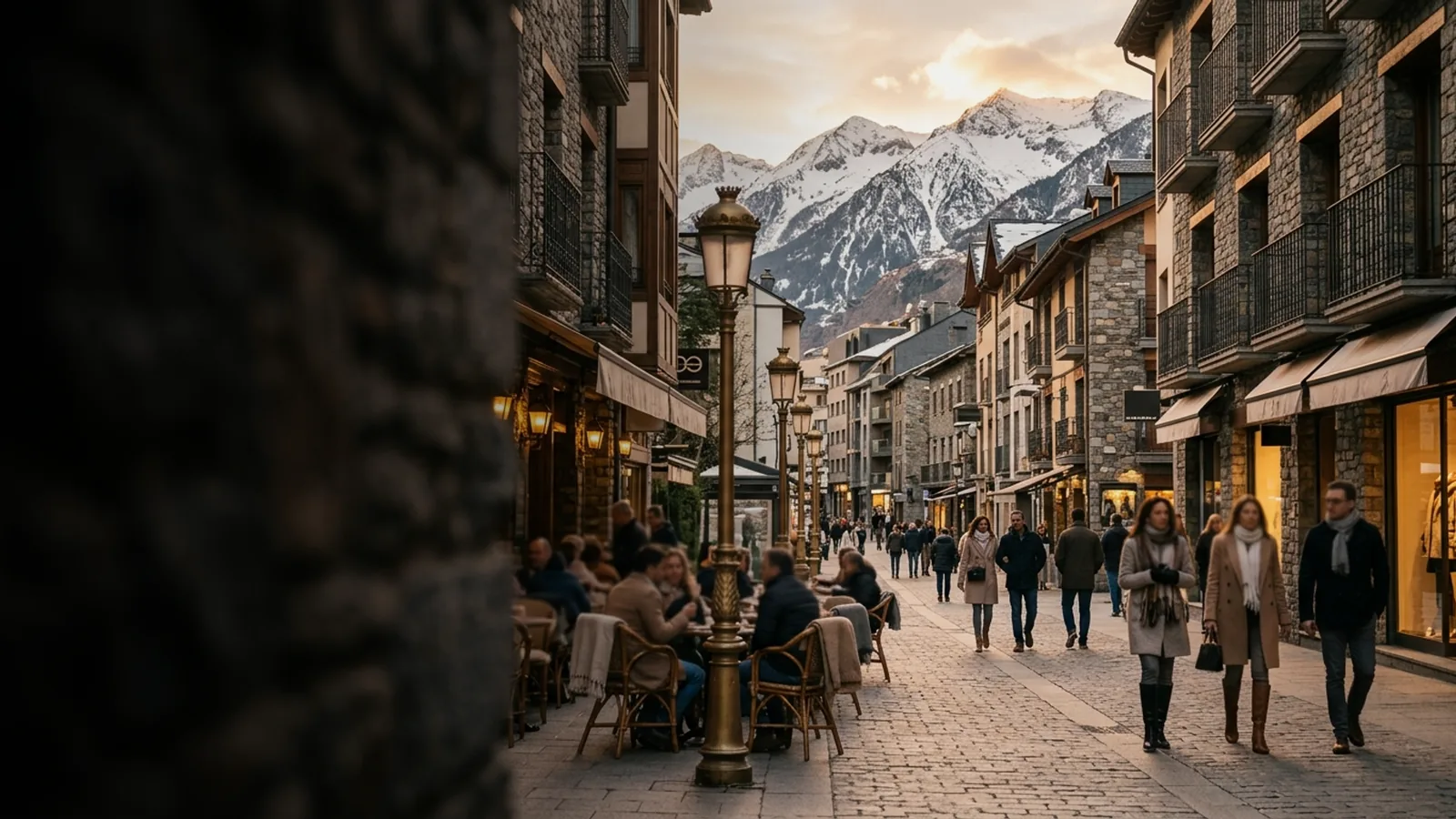
Everyday life: what grates day to day
1. Housing is scarce, and expensive
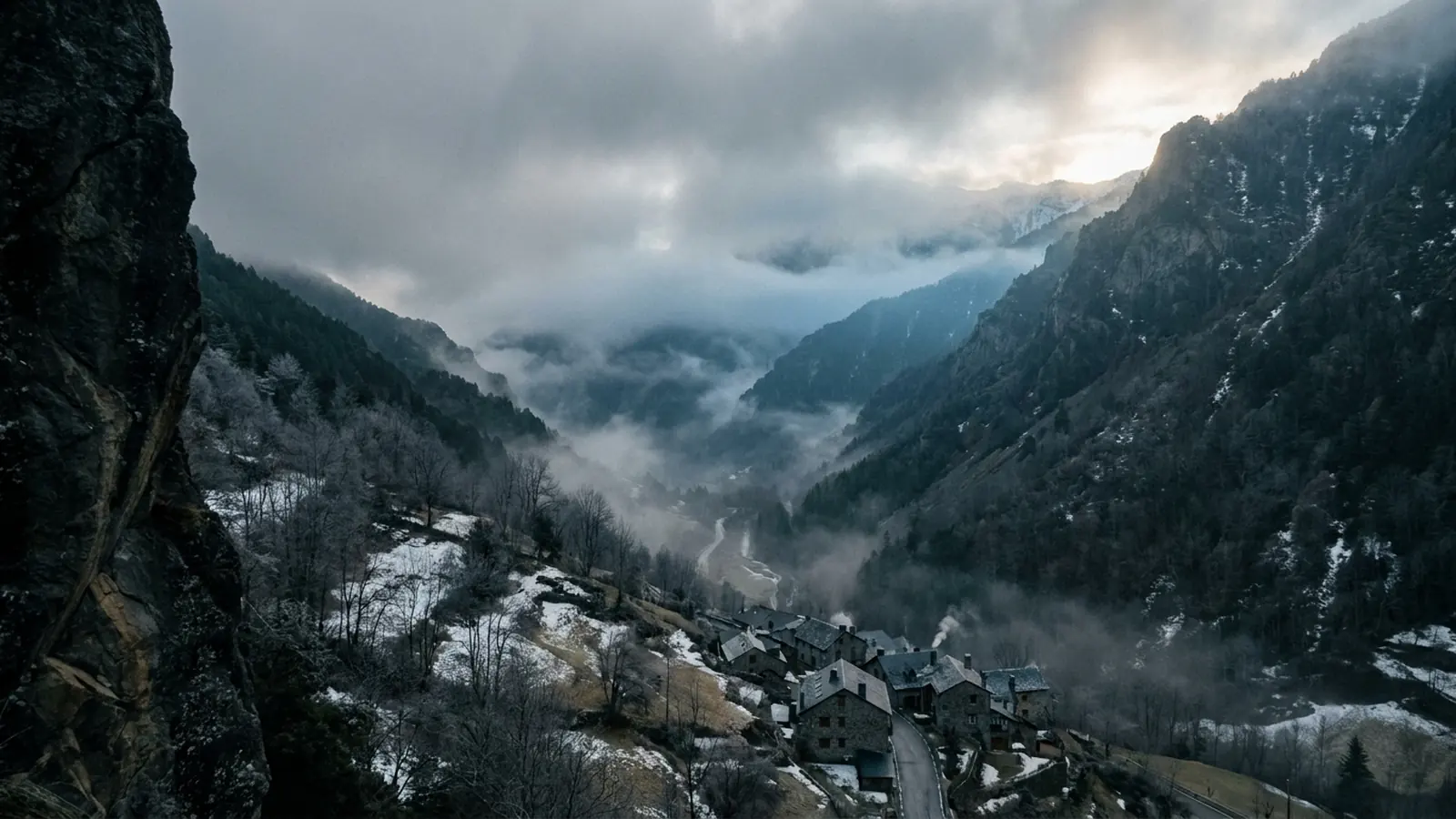
This is the number-one obstacle, far ahead of taxation. The territory covers 468 km², most of it sloped. The available housing stock is narrow, demand is strong, and quality properties are gone within days. At an equal budget, expect a lower standard than in a major French city — and expect to rent before buying, while you get to grips with the market.
Our advice never changes: secure housing before committing to the rest of the file. A relocation plan with no roof identified is a plan that slips by six months. Our guide to the cost of living details the real numbers, item by item.
2. The geographic isolation is real
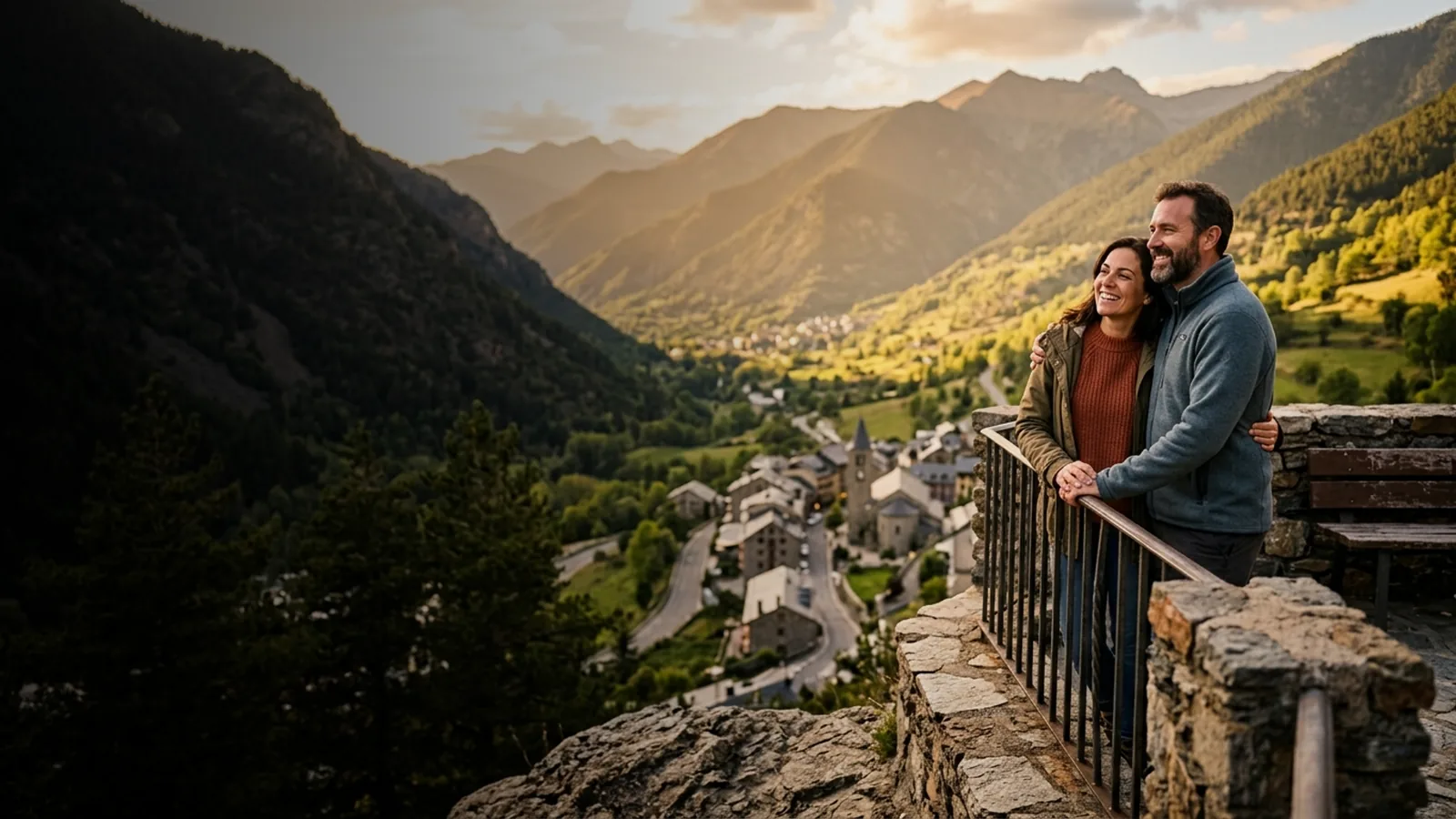
No international airport, no railway station. Barcelona and Toulouse are around three hours away by road, mountain passes included — more on a snowy day or at the start or end of a holiday period. A small regional airport at La Seu d'Urgell serves a handful of Spanish destinations: useful, but not a hub.
In practical terms: every trip has to be planned, spontaneous weekends in Paris no longer exist, and hosting family requires organisation. Those who travel twice a month for business experience it as a daily constraint; those who travel six times a year never think about it.
3. Healthcare is good, but it requires planning
The Andorran system is high-quality and fast: little waiting, and practitioners are often French-speaking. But the CASS does not reimburse everything: it covers most routine care and a higher share of hospital costs, leaving an out-of-pocket balance. Supplementary health insurance is, in practice, essential.
What's more, a country of 85,000 people cannot offer every specialism. Certain procedures and demanding follow-up care are carried out in Spain or France, under cross-border agreements. This is not a quality problem: it is a distance problem.
4. Your partner may not find equivalent work
This is the most common blind spot, and the leading cause of early return. The Andorran job market is narrow and concentrated in retail, tourism, banking, construction and public administration. A senior manager, a specialised healthcare professional, or a niche occupation will not find the equivalent of their French position.
Couples whose relocation succeeds have almost always thought this question through in advance: remote self-employed work, a second role within the family company, or a rethought career plan. Those who put it off discover it after six months, and it is rarely taken well.
The framework: what catches newcomers off guard
5. Andorra is in neither the EU nor Schengen
It is a sovereign principality. A customs union links it to the European Union for industrial goods, but not for agricultural and food products. In practical terms: customs checks at every border crossing, purchase allowances to respect, import formalities, and noticeably more restricted e-commerce — some merchants will not deliver, lead times stretch, and costs rise.
An association agreement with the European Union has been under negotiation for a long time; until it enters into force, this remains the situation. On the plus side, the euro is indeed the official currency: no exchange, no currency risk.
6. Catalan becomes a requirement, not an option
Since April 2026, renewing residence and work permits has included a language requirement: level A1 at the first renewal, A2 at the second, or, failing certification, at least 30 hours of training. Extension to other permit categories is announced for around 2029.
The level required remains modest and the scheme is phased in gradually: it is not an obstacle. But it is a new constraint that many prospective residents do not expect, and one that needs preparing well in advance. See the detail in our guide to the 2026 reforms.
7. Banks are demanding, slow and costly
Three institutions share the market: Andbank, Creand and MoraBanc. Little competition means account-keeping and transfer fees higher than what you would find in France. Above all, compliance is strict: detailed justification of the source of funds, a substantial KYC file, and an account-opening timeline measured in weeks, not days.
A poorly prepared file is refused without a detailed explanation, and a refusal quickly becomes known in a marketplace this size. This is precisely why we prepare account-opening files ourselves before any introduction is made.
8. The ‘tax haven’ label still sticks
Andorra has come off every blacklist, applies the automatic exchange of financial information, and has signed more than twenty tax treaties. The facts, then, are clear — but the reputation is ten years behind the facts. Expect questions from your clients, your partners, and sometimes your foreign bank.
It is not a serious problem: it can be explained in three sentences, provided you know them. We have gathered them in our guide Andorra, a tax haven?
The economics: the subject discussed the least
9. There is a break-even threshold, and it is higher than people think
A relocation carries a fixed cost: company formation, professional fees, the AFA payment, the move, deposit and first month's rent, duplicate costs during the transition, sometimes the exit tax. This cost barely depends on your income — the tax saving, on the other hand, depends on it entirely.
In our experience, below around €120,000 in annual income, the tax gap takes several years to absorb the full cost of relocating your life. It is not impossible: it simply means the decision then has to rest on something other than tax — safety, the mountains, the setting. Our simulator gives you the annual gap in seconds; it is the first figure to look at.
10. The entry ticket has never been this high
Law 2/2026 raised the passive residency investment to €1,000,000 (or €400,000 in the Housing Fund), with a €50,000 payment to the AFA — non-refundable, no longer a recoverable deposit —, plus €12,000 per dependant. On top of this comes an annual quota — 200 non-working residence permits for 2026 — and a foreign real-estate investment tax of 6% to 10% for non-residents.
The trajectory is clear: Andorra is managing its growth and selecting who comes in. Nothing suggests these thresholds will come back down. If your plan is ready, delaying it by two years has a cost.
11. Going back is not a neutral option
Returning to France means returning to French taxation — and sometimes questions about the Andorran years. An eighteen-month round trip is the worst-case scenario: you will have paid all the entry costs, banked little in savings, and weakened your residency file for both years concerned.
Andorra rewards long-term commitment. If you are not ready to picture yourself there for at least five years, the arithmetic does not work.
12. You genuinely have to live there
The last point is the most important, and the most widely misunderstood. Andorran taxation is not a status you buy: it is the consequence of a life genuinely relocated. That means 183 days of actual presence for tax residency, a family that has settled there, decisions made locally, and an evidence file maintained year after year.
Those who hope to keep their house, their children and their habits in France while simply adding an Andorran address do not succeed. Sooner or later, they expose themselves to reassessment. We cover this in detail in our guides proving your tax residency and a company without living there.
Who Andorra is not a good idea for
Let's be frank about it. We advise against Andorra — or ask for extra time to reflect — in the following situations:
- Your income is below ~€120,000 a year and your motivation is purely tax-driven;
- your business cannot be relocated: a local French client base, a practice, a physical shop, a regulated profession tied to the territory;
- you must remain in France for more than 183 days a year, for family, medical or professional reasons;
- your partner works in a specialised occupation they can neither perform remotely nor give up;
- your children are near the end of a school cycle — the transition needs preparing, it cannot be improvised mid-way through their final year;
- your time horizon is under five years, or you are already considering coming back.
And who it really is the best answer in Europe for
- Digital entrepreneurs, software publishers, e-commerce owners and creators whose business fits inside a laptop;
- directors generating significant profit who accept genuinely relocating the centre of their lives;
- asset holders — securities, crypto-assets, shareholdings — for whom the absence of wealth tax and inheritance tax changes the scale of the estate passed on;
- families seeking rare levels of safety, trilingual schools and the mountains on their doorstep;
- retirees with investment income, provided they factor in the healthcare question.
The honest scorecard
| Topic | What you gain | What you lose |
|---|---|---|
| Taxation | 10% IS, ≤10% IRPF, no wealth tax or inheritance tax | A high, non-recoverable entry cost |
| Safety | One of the safest countries in the world | A small-town social life |
| Mobility | Barcelona and Toulouse ≈3 hrs away | No international airport, no train |
| Housing | A recent, well-maintained housing stock | A scarce and expensive market |
| Healthcare | Fast, high-quality, often French-speaking | An out-of-pocket balance; major specialisms located abroad |
| Professional life | A simple, fast business environment | A narrow job market for the accompanying partner |
| European framework | Euro, customs union, 20+ tax treaties | Outside the EU and Schengen: customs at every crossing |
| None of these downsides is a dealbreaker taken in isolation. It is their combination, weighed against your own situation, that should decide. | ||
Key takeaways
- Housing, not taxation, is the real first obstacle
- Neither the EU nor Schengen: customs, allowances, restricted e-commerce
- Catalan A1 then A2 at permit renewal since April 2026
- A break-even threshold sitting, in our experience, around €120,000 in annual income
- Passive residency at €1M, a quota of 200 permits in 2026: the entry ticket keeps rising
- The partner's employment is the leading cause of early return
- 183 days of actual presence: taxation is not bought, it is lived
If, after reading this, your plan still stands up: it will probably hold up over time. This is exactly what we try to find out during the first conversation — and we say so when the answer is no.
Let's talk frankly about your situation: income, activity, family, time horizon. In a single conversation, you will know whether Andorra is your answer — or whether it is not.