In brief: Andorra vs France: what you actually keep.
- Can a French national live in Andorra and work in France? Yes, the situation exists and the 2013 treaty governs it precisely: salaries from employment carried out in France remain taxed in France.
- What does the tax treaty between France and Andorra provide? Signed on 2 April 2013 and in force since 2015, it allocates taxing rights between the two countries, eliminates double taxation and sets clear, successive criteria for determining tax residency.
- How long does it take to become an Andorran tax resident? Allow a benchmark of 8 to 12 weeks to set up your company, with the residence permit following on as part of the same application.
Short answers by Andorre Gestoria, a French-speaking tax and wealth advisory firm in Canillo (RLG CAPITAL, SL). Details, figures and sources in the article — updated 15 October 2026.
Of all the possible comparisons, Andorra vs France is the one where the gap is most spectacular. That makes sense: France ranks among the heaviest tax systems in Europe, Andorra among the lightest. But beyond the figures, what counts for success is a genuine, well-prepared move. Here is the complete picture — figures, legal criteria, a worked example and a timetable.
The tax gap: the widest of all
In France, income tax climbs to 45 % (with social levies on top), corporate tax stands at 25 %, dividends at 31.4 % (flat tax), VAT at 20 %, the IFI wealth tax at up to 1.5 %, inheritance tax at up to 45 % in the direct line (60 % between non-relatives), and social charges exceed 45 %. In Andorra: 10 % maximum on income and on companies alike, 0 % on Andorran-source dividends, no wealth or inheritance tax, and IGI at 4.5 %. For many, the gap runs to tens of thousands of euros a year.
Andorra: the essentials, 3 hours from home
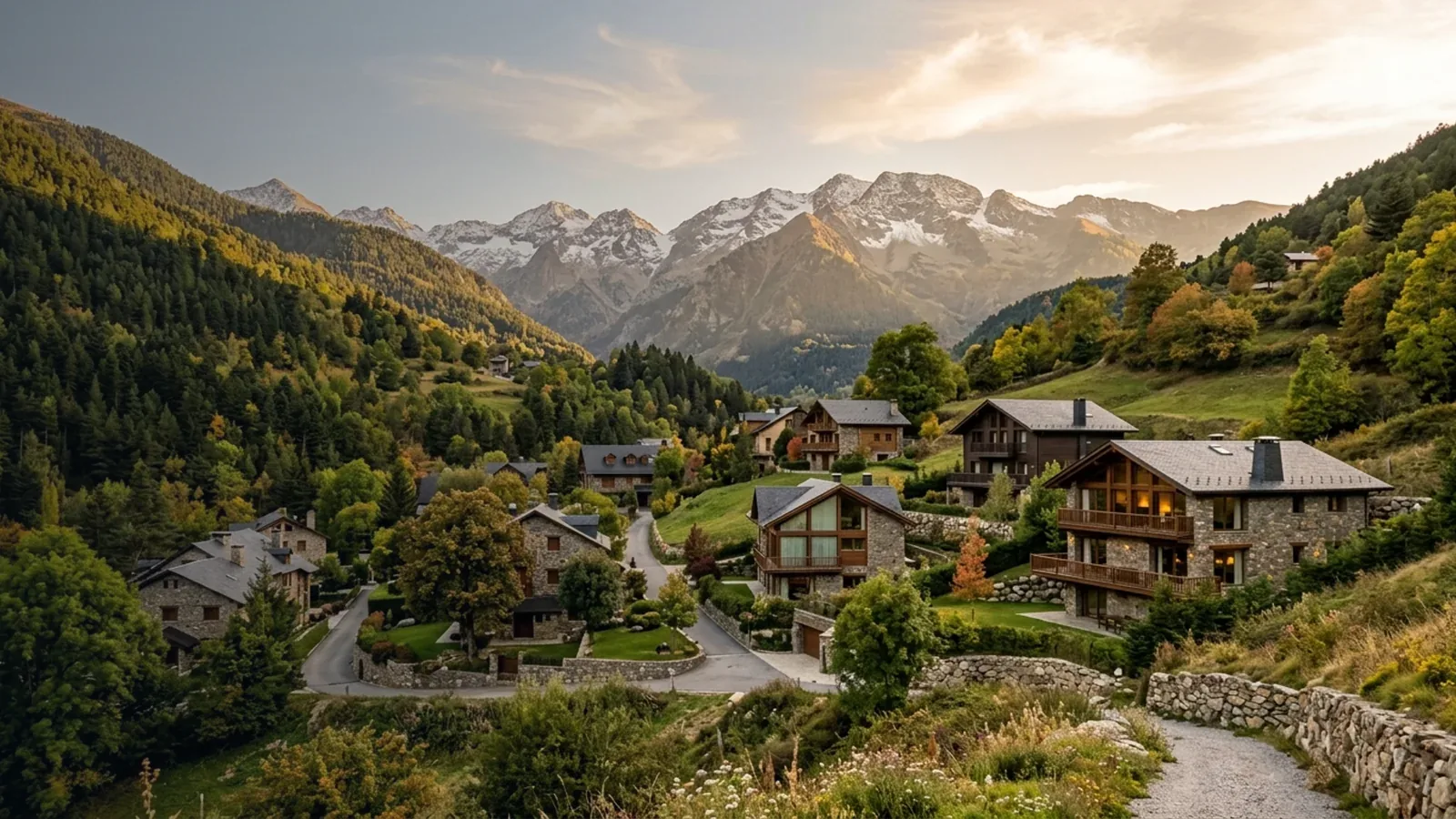
Best of all: you do not have to move to the other side of the world. Andorra is European, French-speaking in practice, 3 hours from Barcelona and Toulouse. You keep your loved ones, your clients and your bearings within reach — while radically lightening your tax burden, in a safe, treaty-based and recognised framework. Leaving from south-west France? We have written a guide dedicated to relocating from Toulouse, the most natural route to the Principality.
A smooth transition, organised by the 2013 treaty
The Franco-Andorran tax treaty, signed on 2 April 2013 and in force since 2015, clearly allocates taxing rights between the two countries and prevents double taxation. The key to a successful transition comes down to one simple principle: establishing a genuine Andorran residence — actually living there (beyond 183 days) and having the centre of your interests there. Well prepared, your move is solid, calm and unassailable. That is precisely what we orchestrate for you, from start to finish.
The tie-breaker criteria of the treaty of 2 April 2013
What happens if both tax authorities could, in theory, consider you a resident? The treaty has provided for everything: it applies a cascade of successive criteria, in a precise order. As soon as one criterion settles the matter, the following ones are not even examined.
- The permanent home. Where do you have a dwelling permanently available to you? If it is only in Andorra, the question is already settled.
- The centre of vital interests. If you keep a home in both countries, the question becomes where your closest personal and economic ties lie: family, company, bank accounts, social and daily life.
- The habitual abode. Failing that, the country where you habitually stay prevails — hence the importance of the 183 days spent in Andorra, traceable and documented.
- Nationality. The final criterion, almost never reached in practice when the move is genuine.
A concrete example: a company director rents an apartment in Andorra la Vella, moves his family there, domiciles his company and his bank accounts there, while keeping a pied-à-terre in France for his trips. Two permanent homes? The first criterion is not enough — but the second immediately settles the matter in Andorra’s favour: that is where the heart of his family life and the centre of his business lie. The message is very positive: a genuine, documented move makes Andorran residency unassailable. The treaty’s cascade is not a trap, it is your best protection — provided the file is built methodically.
Andorra vs France: the tax comparison, figure by figure
| Levy | Andorra | France |
|---|---|---|
| Income tax (max) | 10 % | 45 % (+ social levies) |
| Corporate tax | 10 % | 25 % |
| Dividends | 0 % (Andorran source) | 31.4 % (flat tax) |
| Crypto capital gains | 10 % max | 31.4 % (2026 flat tax) |
| VAT / IGI | 4.5 % | 20 % |
| Wealth tax | None | IFI up to 1.5 % |
| Inheritance tax | None | 45 % in the direct line, up to 60 % |
| Social charges | ~22 % | > 45 % |
| Indicative 2026 rates. The Franco-Andorran treaty of 2 April 2013 prevents double taxation. | ||
A worked example: €100,000 of profit distributed to the director
Nothing speaks louder than an example. Take a director whose company makes €100,000 of profit, distributed in full as dividends. On the French side: corporate tax first takes 25 %, then the 31.4 % flat tax applies to the remaining €75,000 (calculated without the reduced 15 % SME rate on the first €42,500 of profit, which would bring the gap down to around €35,600). On the Andorran side: 10 % corporate tax… and that is all, as Andorran-source dividends are exempt for a resident.
| Step | Andorra | France |
|---|---|---|
| Profit before tax | €100,000 | €100,000 |
| Corporate tax | €10,000 (10 %) | €25,000 (25 %) |
| Tax on dividends | €0 (0 %) | ≈ €23,550 (flat tax 31.4 %) |
| Total levies | ≈ €10,000 | ≈ €48,550 |
| Net received by the director | ≈ €90,000 | ≈ €51,450 |
| Indicative 2026 simulation, for a company distributing its entire profit. That is 79 % less in levies in Andorra. | ||
Nearly €38,550 of difference every year, on a single financial year. The first step? Set up a company in Andorra, the foundation of active residency and of the whole structure.
Quantify my own case with the comparator
Preparing the departure: method and timetable
A successful departure from France is prepared like a big house move: everything is simple when every box has been labelled in advance.
Anticipate unrealised gains. If you hold a large securities portfolio, article 167 bis of the French tax code provides for special treatment of unrealised gains at the time of the transfer of domicile. It is a mechanism that is very easy to anticipate with a well-prepared file: we systematically build it into the roadmap, together with your advisers, so that this step is dealt with calmly before the big leap.
Complete the formalities for the year of departure. In the year you move, you inform the French tax authorities of your new address and file your last return as a resident (with the precise date of departure) and then, the following year, a return limited to any French-source income. Add to this the usual deregistrations and updates: social security bodies, banks, insurers, professional registers. Nothing complex — simply a list to work through in the right order.
Choose the right timetable. Ideally, take the step before the 183rd day of the year, i.e. in the first half: you then spend more than half the year in Andorra, and your first year of Andorran residence starts on a perfectly clean footing. A departure in spring, with the company set up within the benchmark 8 to 12 weeks, leaves all the margin you need. Our page on becoming an Andorran tax resident details every step of the process.
Andorra or France: the verdict, and for whom?
For any French taxpayer with significant income or wealth, Andorra offers the greatest gain of all destinations — without leaving Europe or moving away from loved ones. The only condition: a genuine, well-prepared move. On that basis, the transition is as smooth as it is advantageous.
Key takeaways
- France: up to 45 % (income tax), 31.4 % (dividends), up to 60 % (inheritance), IFI wealth tax
- Andorra: 10 % max, 0 % on dividends, wealth and inheritance, IGI at 4.5 %
- €100,000 distributed: ≈ €48,550 of levies in France, ≈ €10,000 in Andorra (−79 %)
- Transition secured by the 2013 treaty + a genuine residence (183 days)
- Ideal departure in the first half of the year, before the 183rd day
- And all this 3 hours from Barcelona and Toulouse
Want to quantify your gain precisely? We model your situation and build your Andorran tax residency on solid foundations. See also all the tax advantages of Andorra.